
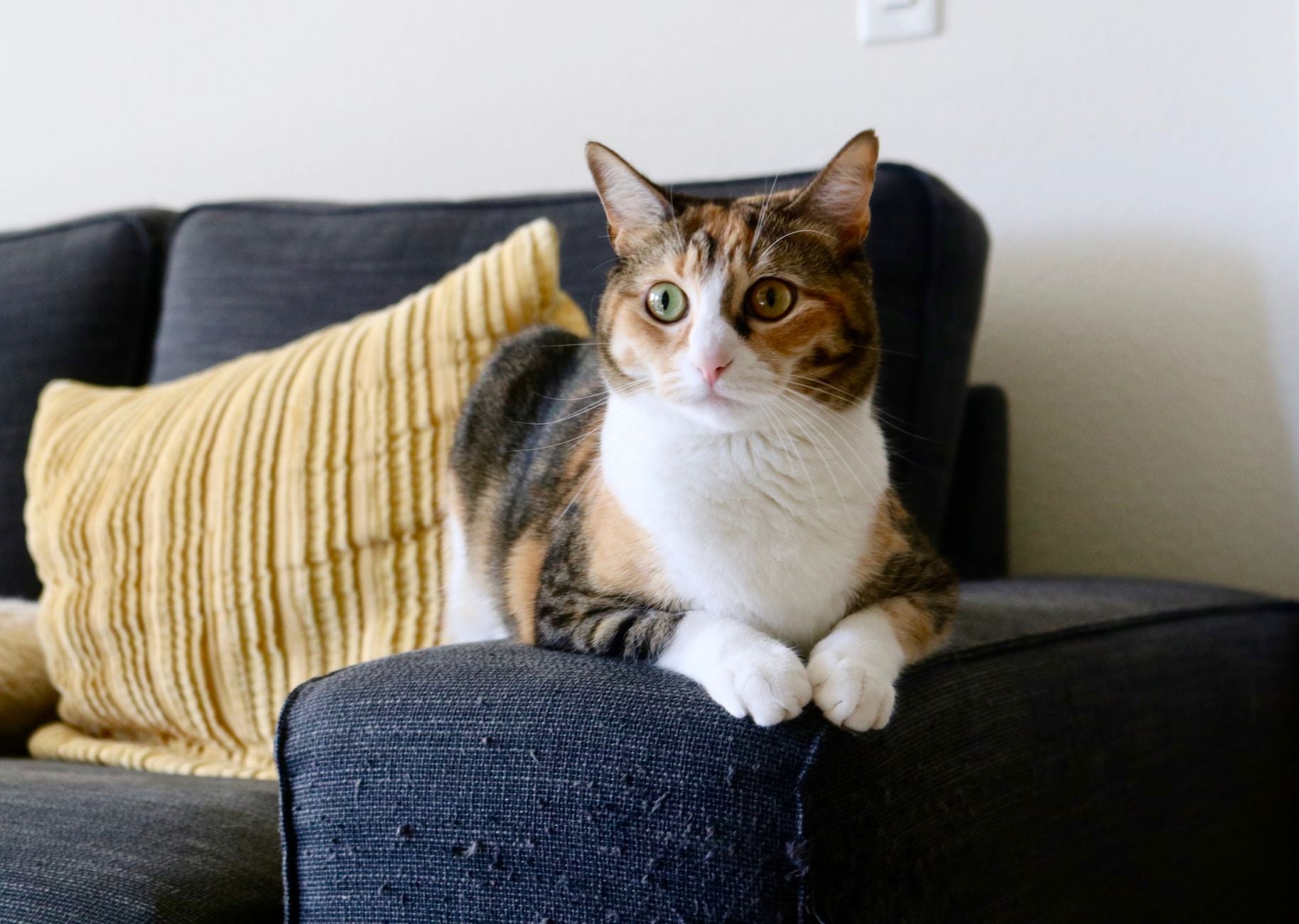
Effective Ways to Eliminate Pet Odors at Home
Effective Ways to Eliminate Pet Odors at Home
Your home smells like your pet. Wet dog. Cat litter. Mystery spots in the carpet that linger for weeks.
If you're wondering how to eliminate pet odors, you're in the right place.
Good news: you don't need fancy gadgets or harsh chemicals, just solid habits and the right products. Here's what you'll get:
- Quick fixes for sudden smells
- A simple cleaning routine for carpets, sofas, and bedding
- Natural deodorizers you probably already have at home
- Tips on preventing odors before they start, covering litter box placement, grooming, and all the rest
- What to avoid so you don't make things worse
When you're done reading, you'll know exactly how to tackle each type of pet smell and keep your home actually welcoming.
Locating the Source of Pet Odors
To eliminate pet odors, you've got to know what you're smelling. Most lingering smells trace back to urine and feces, which leave salts and organic residue that rewet whenever humidity climbs, and that's why an old accident can suddenly reek on a rainy afternoon even if you cleaned it months ago.
Dander, tiny skin flakes mixed with fur, settles deep in carpets and sofas. Saliva on toys sours quickly in warm rooms. Odor compounds cling to porous fibers. Clogged HVAC filters spread the smell to every corner of the house.
Quick diagnostic steps
Materials needed: paper towels, UV flashlight, HEPA vacuum, HVAC filter, and a plant-derived enzyme cleaner, Earthworm. Locate sources with your nose first, then use a UV light to spot urine on carpets so you'll know exactly where to treat. If you need help pinpointing problem areas, see guidance on locating stains.
Treat spots by blotting fresh moisture, then saturating with an enzyme cleaner and letting it dwell per label instructions so it digests odor molecules rather than masking them. The odor is neutralized at its source, not just covered over.
Improve air quality by opening windows for cross ventilation, running a HEPA purifier, and replacing filters. Fewer lingering scents circulating through the rooms. For more on this, see expert tips on purifiers and filter changes.
Enzyme formulas work at the molecular level on the organic matter pets leave behind. They're essential. If you want the science, here's how enzyme cleaners work. Earthworm's plant-derived solutions are safe for families and work on carpet, upholstery, and hard floors. For old urine soaked into padding, reapply and let the area air dry completely so the enzymes can finish the job. Once areas are fully dry, sprinkle baking soda, let it sit for 30 minutes, and vacuum. It pulls out deep-set smells you didn't know the fibers had still been holding.
Essential Tools and Materials for Odor Elimination
Enzymatic cleaners
Start with an enzymatic cleaner. It breaks down urine and other organic messes rather than just covering them up, and Earthworm's environmentally conscious formulas use plant-derived enzymes that are safe for families and pets, actually working on odor sources rather than simply perfuming the air. For fresh accidents, blot first, then saturate so the solution reaches padding or grout. Let it sit for at least 15 minutes. Longer for older spots. Enzymes need time to digest the residue, and skipping that dwell window is the most common reason treatments fail. You'll get a neutral finish without perfume, which also stops pets from re-marking the spot.
Pro tip: Skipping the dwell time is the most common reason enzyme treatments fail. Let the cleaner sit at least 15 minutes, longer for older spots, so the enzymes can fully digest the residue.
Materials you'll need: an enzymatic cleaner, a sealed HEPA vacuum, microfiber cloths, baking soda, white vinegar, and a spray bottle.
- Blot.
- Saturate.
- Wait 15 to 30 minutes, then blot again.
High-quality vacuum with HEPA filter
A sealed HEPA vacuum removes dander, hair, and allergen-laden dust from soft surfaces, cutting down the background odor that most people can't quite place. HEPA filtration captures 99.97 percent of particles down to 0.3 microns, so fewer smelly bits get recirculated back into your air. Use upholstery and crevice tools two to 3 times weekly in pet zones. Empty the bin outdoors. Maintain filters so the vacuum keeps working.
Microfiber cloths, baking soda, and white vinegar
Microfiber grabs fine dander with barely any product. Perfect for quick wipe-downs of crates, litter areas, and baseboards. For deep-set smells, sprinkle baking soda on carpets or pet beds, let it sit at least 30 minutes, then vacuum it all up. On hard floors or sealed fabrics, spritz a 1:1 mix of white vinegar and water, test it first, then wipe with microfiber.
Pro tip: Don't use vinegar on natural stone. It can etch and damage the surface.
Paired with your HEPA vacuum and Earthworm enzymes, the kit keeps rooms consistently fresh without much effort.
Step-by-Step Guide to Removing Pet Odors from Carpets and Upholstery
Before you begin
Gather materials: an enzymatic cleaner, specifically Earthworm's plant-derived Carpet and Pet Stain & Odor Remover, clean white towels, a soft brush, a measuring cup or squeeze bottle, a wet/dry vacuum or carpet extractor, and an optional black light. Have fans ready to speed drying. Enzymatic formulas work by digesting the odor-causing proteins, so you're removing the smell at its source rather than masking it, and the result is safer for kids and pets than most conventional sprays. You'll actually eliminate pet odors in your home with the kit.
Step 1: Pre-treat with an enzymatic cleaner
Find every spot first. Sniff-test seams and use a black light to reveal older urine stains, marking all targets for treatment before you open a single bottle. For fresh accidents, blot firmly with layered paper towels until barely damp. Don't rub. Generously saturate each stain with Earthworm's enzymatic cleaner so it soaks into the backing and padding where odors hide. Gently work the solution in with a soft brush or by tamping with a towel, and treat a small border around the spot in case liquid spread outward.
Step 2: Let enzymes penetrate and work
Allow 10 to 15 minutes of dwell time, since the enzymes need that window to break down organic compounds fully. For older or heavy stains, keep the area slightly damp for up to an hour by covering it with a clean, lightly moistened towel. Avoid aggressive scrubbing, which pushes residue deeper into the fiber. After dwell time, blot up the excess. Once it's nearly dry, sprinkle baking soda, let it sit 30 minutes, and vacuum.
Step 3: Extract deeply without setting odors
Use a wet vacuum or extractor with plain water. Avoid high heat, since steam can set urine proteins into fibers permanently. If you only have a steam cleaner, run it on water-extraction mode or the lowest heat setting after enzymatic treatment. Make slow, overlapping passes until you pull up minimal moisture. Dry fast with fans and open windows. Done right, fibers are clean, odors are neutralized, and pets are less likely to re-soil the area. For more on safe extraction, see caution and extractor recommendation.
Pro tip: Don't let the product dry out before you extract it. The enzymes are still working, and pulling the moisture too soon is what leaves that faint smell people keep noticing weeks later, says Don Ellis, a carpet restoration technician with more than 10 years of experience on residential pet damage.
Tips for Eliminating Odors from Pet Bedding and Toys
Ready to try it?
Earthworm uses real enzymes to break down organic matter at the source. Fragrance-free. Safe for kids, pets, and septic systems.
Shop Pet Stain & Odor Eliminator →


