
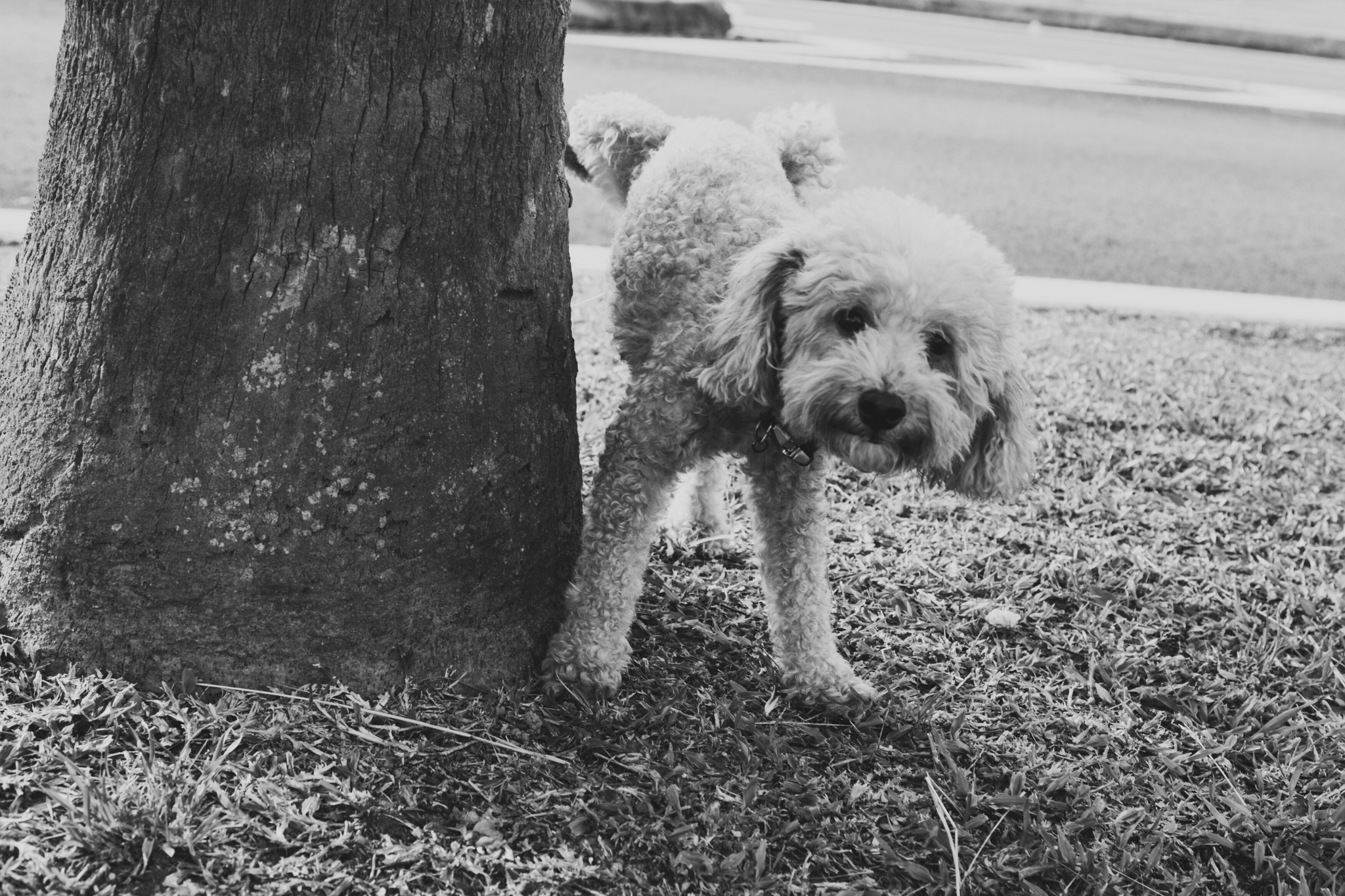
Why Do Dogs Pee in the Same Spot? The Science Behind Canine Behavior
Dogs pee in the same spot because urine functions as communication. It contains chemical signals, specifically pheromones and uric acid compounds, that persist on surfaces long after the liquid has evaporated. Other dogs read these signals. So does your dog when they return to the same patch of grass, the corner of the rug, or the base of the fence.
Understanding why this happens is the first step toward actually stopping it.
Territorial Marking
Marking is instinctive behavior, particularly in intact male dogs, though females and neutered dogs do it too. When a dog deposits urine in a specific location, they're leaving a chemical record of their presence. That record includes information about the dog's identity, sex, reproductive status, and stress level.
When your dog sniffs a spot they've used before, they're reading their own previous signal and reinforcing it with a new one. It's the canine equivalent of signing your name on something you've already signed.
The practical problem is that the uric acid in dog urine forms crystals that bond tightly to surfaces when they dry. These crystals persist, and your dog can detect them at concentrations far below what humans can smell. That's the core reason why repeated cleaning with standard products doesn't break the habit: the physical signal is still there even when you can't smell it anymore.
Anxiety and Stress
Some repeated marking is anxiety-driven rather than territorial. Dogs that are stressed by changes in the home environment, new pets, new people, schedule disruptions, separation anxiety, tend to mark or re-mark familiar spots as a self-comforting behavior. The familiar smell of their own urine is reassuring in the same way that a familiar blanket is.
If the repeated urination is in multiple locations and accompanied by other stress behaviors, whining, destructiveness, inability to settle, this is probably the mechanism rather than pure territorial marking.
Medical Considerations
Repeated urination indoors in a dog that has been reliably house-trained can also signal a medical issue: urinary tract infection, bladder stones, kidney disease, or hormonal imbalance. Any dog that suddenly develops indoor urination problems after years of being reliably trained should see a vet before you assume it's behavioral.
Breaking the Pattern
The key is eliminating the residual chemical signal from previous accidents so the dog no longer detects a marked spot. This requires a genuine enzyme cleaner, not soap, not vinegar, not any cleaner that doesn't contain live bacterial cultures that break down uric acid.
Standard cleaning products clean the visible stain and may remove the smell for humans, but they don't eliminate uric acid crystals. The dog can still detect the marker. Enzyme cleaners break down the uric acid at the molecular level, which removes the chemical signal the dog is responding to.
Earthworm's enzyme cleaner for pet stains and odors is fragrance-free, which matters specifically here. If you use a strongly-scented cleaner, the dog may avoid the spot temporarily because of the overwhelming scent, but return once it fades. Fragrance-free enzyme treatment removes the underlying signal without replacing it with a competing smell that eventually dissipates.
Application: saturate the area, let it sit 15 minutes, blot dry. For spots that have been used repeatedly over a long period, two applications a day apart gives the enzymes time to work through accumulated uric acid deposits.
How to stop a dog from peeing in the same spot
Breaking the pattern requires three things happening in order: eliminate the chemical signal, prevent access to the spot while you work, and redirect the behavior to an acceptable location.
Step 1: Eliminate the uric acid signal completely
Saturate the spot (and 2 to 3 inches beyond it) with a bioenzymatic pet cleaner like Earthworm Pet Stain and Odor Eliminator. The enzyme treatment has to reach every crystal, not just the visible stain. Let it dwell for 15 to 30 minutes (longer for repeated marking sites where crystals have accumulated). Blot and air dry. Repeat for two to three consecutive nights on old spots. Skip this step and the dog will return to the same place as soon as you give them access.
Step 2: Prevent physical access while the cleaning sets
Block the spot for at least 72 hours after the final enzyme treatment. Baby gate, furniture rearrangement, piece of cardboard, whatever prevents the dog from reaching it. This gives the enzymes full dwell time and lets the dog's nose-memory of the location start to fade.
Step 3: Redirect to an acceptable location
Take the dog to an approved pee location (outside, on a pad, in a specific area) on a consistent schedule. First thing in the morning, after meals, after naps, before bed. Reward heavily with high-value treats the moment they finish urinating in the right spot. The goal is to build a new strong association faster than the old one fades.
Step 4: Watch for regression triggers
Once the behavior stops, it can come back under stress (visiting pets, schedule changes, moving, new family member). Keep enzyme cleaner on hand and re-treat the location at the first sign of a repeat incident. The first recurrence is easier to stop than the second.
Why do dogs pee where other dogs have peed
This is overmarking. When your dog encounters another dog's urine on a walk, a tree, a fence post, a fire hydrant, they read the chemical signal and respond by depositing their own urine on top. This is normal outdoor behavior and generally not a problem.
Overmarking becomes a household problem when the dog overmarks indoor spots where another pet has had an accident, or where a previous resident's pet marked before you moved in. In those cases, the enzyme cleanup is the main intervention. Eliminate the previous dog's chemical signal and your dog has nothing to overmark.
What not to do
A few common responses actually make the problem worse:
- Do not punish after the fact. Pointing at a stain and scolding the dog hours later teaches the dog that urine is bad, not that peeing indoors is bad. The dog just learns to hide it (behind furniture, under beds).
- Do not use ammonia-based cleaners. Ammonia smells similar to urine to a dog. Using it tells the dog this is still a marking location.
- Do not rely on scented sprays. Strong scents mask the signal temporarily but fade over days. The underlying marker is still there. The dog returns as soon as the mask wears off.
- Do not use steam cleaners on urine stains. Heat above 95F denatures enzymes and can set the uric acid deeper into carpet padding. Room temperature treatment works better.
- Do not assume it will stop on its own. Dogs do not unlearn marking spontaneously. The longer a spot is marked, the stronger the pattern becomes.
How long does it take to break the habit?
For fresh marking (first few incidents), complete enzyme treatment plus one week of blocked access and consistent redirection usually breaks the pattern. For established marking over months or years, expect 4 to 8 weeks of sustained effort: enzyme cleaning, physical blocks, scheduled outdoor trips, and rewards for correct behavior.
The biggest factor is completeness of the enzyme treatment on day one. Partial cleanup leaves enough chemical signal that the dog can still detect the marker, and the behavior resumes the moment access is restored.
Environmental Management
While you're breaking the marking habit chemically, physical barriers help. Block access to the frequently-used spot if you can. Redecorating the area so it doesn't look or smell the same disrupts the association. Dogs mark by context, so changing the physical characteristics of a spot, a piece of furniture moved, a different rug, can help interrupt the pattern.
For dogs with high territorial drive or significant anxiety, consultation with a veterinary behaviorist is often more effective than owner-managed training. Medication combined with behavioral modification has better outcomes for severe cases than behavioral modification alone.
For a complete guide on how to actually break the cycle , including the enzyme treatment that removes the scent signal entirely , see our guide to enzyme cleaner for dog urine.


