
Why Do Dogs Pee in the Same Spot? The Science Behind Canine Behavior
Why Do Dogs Pee in the Same Spot? The Science Behind Canine Behavior
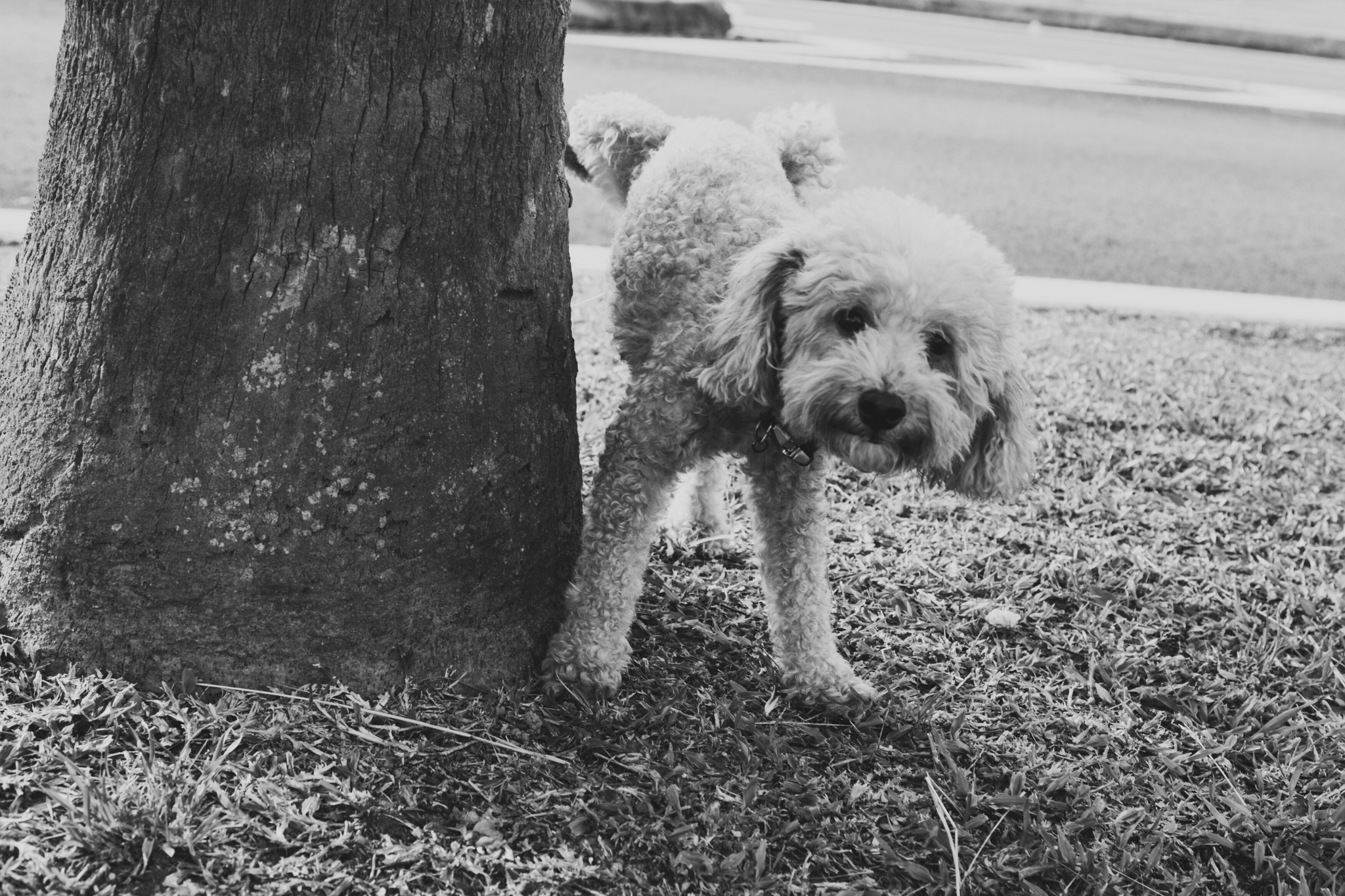
Dogs pee in the same spot because urine is communication. It carries chemical signals, pheromones and uric acid compounds, that stay on surfaces long after the liquid has dried away. Other dogs read them. So does your dog every time he trots back to the same corner of the rug or the base of the fence post. Knowing why it happens is the first real step toward stopping it.
Territorial Marking
Marking is instinct. It's strongest in intact male dogs, though females and neutered dogs do it too, and the mechanics are the same regardless. When a dog deposits urine somewhere, he's leaving a chemical record: identity, sex, reproductive status, stress level. When he returns to a spot he's used before, he reads his own previous signal and lays a fresh one on top. Think of it as signing your name on a document you've already signed.
The practical problem comes down to chemistry. Uric acid in dog urine forms crystals that bond hard to surfaces when they dry. Your dog can detect them at concentrations so low a human nose would never register anything. That's why scrubbing the spot with standard cleaners doesn't stop the behavior. The physical signal is still there.
Anxiety and Stress
Some repeated marking has nothing to do with territory. Dogs stressed by changes at home, a new pet, a shifted schedule, separation anxiety, tend to re-mark familiar spots as a kind of self-comfort. Their own scent is reassuring, the same way a familiar blanket can be.
If the urination is scattered across multiple locations and paired with other stress signals, whining, destructiveness, an inability to settle, anxiety is almost certainly the driver rather than pure territorial instinct.
Medical Considerations
A dog that was reliably house-trained for years and suddenly starts going indoors may have a urinary tract infection, bladder stones, kidney disease, or a hormonal imbalance. See a vet first. Don't assume it's behavioral until a medical cause has been ruled out.
Pro tip: Any sudden change in a reliably house-trained adult dog warrants a vet visit before you assume the cause is behavioral.
Breaking the Pattern
The key is destroying the residual chemical signal so the dog no longer reads a marked spot where one used to be. Soap won't do it. Vinegar won't do it. An enzyme cleaner with live bacterial cultures that break down uric acid is the only tool that actually works here.
Standard cleaners remove the visible stain and the smell for humans.
The dog can still detect the marker.
Enzyme cleaners break down uric acid at the molecular level. That removes the chemical signal the dog is responding to, rather than masking it. Earthworm's enzyme cleaner for pet stains and odors is fragrance-free, and that detail matters more than it sounds. A strongly scented cleaner might push the dog away from the spot temporarily, but once that competing smell fades, the underlying marker is still there and he's back. Fragrance-free enzyme treatment removes the signal outright without leaving a secondary scent to dissipate. Application: saturate the area, let it sit 15 minutes, blot dry. For spots that have been hit repeatedly over a long stretch, two applications a day apart gives the enzymes time to work through accumulated uric acid deposits.
How to stop a dog from peeing in the same spot
Breaking the cycle requires three things in order: eliminate the chemical signal, cut off access to the spot, then redirect the behavior to somewhere acceptable.
Step 1: Eliminate the uric acid signal completely
Saturate the spot, and 2 to 3 inches past its edges, with a bioenzymatic pet cleaner like Earthworm Pet Stain and Odor Eliminator. The treatment has to reach every crystal, not just the visible stain. Let it dwell for 15 to 30 minutes, longer on spots that have been marked repeatedly for months. Blot and air dry. Repeat for two to three consecutive nights on old spots. Skip step one and the dog returns the moment you give him access.
Step 2: Prevent physical access while the cleaning sets
Block the spot for at least 72 hours after the final enzyme treatment. Baby gate, rearranged furniture, a piece of cardboard, whatever keeps the dog away. Full dwell time for the enzymes, and a chance for the dog's nose-memory of the location to start fading.
Step 3: Redirect to an acceptable location
Take the dog to an approved spot on a consistent schedule: first thing in the morning, after meals, after naps, before bed. Reward immediately and heavily with high-value treats the moment he finishes urinating in the right place. You're building a new strong association fast enough to replace the old one.
Step 4: Watch for regression triggers
Once the behavior stops, stress can bring it back. Visiting animals, schedule shifts, moving, a new family member. Keep enzyme cleaner on hand and re-treat the location at the first sign of a repeat. The first recurrence is far easier to stop than the second.
Why do dogs pee where other dogs have peed
Overmarking. Your dog encounters another dog's urine on a walk or a fence post, reads the chemical signal, and deposits his own on top. Normal outdoor behavior. It becomes a household problem when he overmarks an indoor spot where a previous pet had an accident, or where a resident from before you moved in left a marker. Eliminate the previous dog's chemical signal and there's nothing left to overmark.
What not to do
A few common responses make things worse.
- Don't punish after the fact. Pointing at a stain and scolding the dog hours later teaches him that urine is something to hide, so he moves behind the furniture or under the bed instead of stopping.
- Don't use ammonia-based cleaners. Ammonia smells close enough to urine that it can actually reinforce the dog's sense that the spot is a marked location.
- Don't rely on scented sprays. They mask the signal for a few days. The marker itself remains, and the dog returns once the cover scent is gone.
- Don't use a steam cleaner on urine stains. Heat above 95F denatures enzymes and can drive uric acid deeper into carpet padding. Room-temperature treatment works better.
- Don't assume it'll resolve on its own. Dogs don't unlearn marking spontaneously, and the longer a spot is used, the harder the pattern is to break.
How long does it take?
"For a fresh marking problem, you're usually looking at one thorough enzyme treatment and a week of blocked access combined with consistent redirecting," said a veterinary behaviorist familiar with the approach. For habits built over months or years, expect 4 to 8 weeks of sustained effort: enzyme cleaning, physical barriers, scheduled outdoor trips, and rewards for correct behavior. The single biggest factor is how completely the enzyme treatment was done on day one. Partial cleanup leaves enough signal that the dog detects the marker, and the behavior picks right back up the moment access is restored.
Environmental Management
Physical barriers help while you're breaking the habit. Block the frequently-used spot. Rearrange the area so it doesn't look or feel the same to the dog. Context matters in canine marking, and shifting the physical characteristics of a location, moving a piece of furniture, swapping a rug, can interrupt an established pattern.
For dogs with strong territorial drive or significant anxiety, a veterinary behaviorist is often the better call. Medication paired with behavioral modification produces better results in severe cases than owner-managed training alone.
For a complete guide on how to break the cycle, see our guide to enzyme cleaner for dog urine.
Ready to try it?
Earthworm uses real enzymes to break down organic matter at the source. Fragrance-free. EPA Safer Choice certified. Safe for kids, pets, and septic systems.
Shop Pet Stain & Odor Eliminator →


